
Discover Mainz through Roman ruins, cathedral squares, Rhine riverside walks and Rheingau wine culture. Our experience-led Mainz travel guide covers the best things to do, where to eat, where to stay and whether Mainz is worth visiting.
- Overview
- Travel to and Around Mainz
- How Much Time Is Needed in Mainz?
- Is Mainz, Germany Worth Visiting?
- Our Top Things to do in Mainz
- Exploring Mainz With a Guide
- 1. Start Your Morning at Mainz Citadel
- 2. See the Roman Theatre of Mainz
- 3. Relax in Stadt Park Mainz
- 4. Wander Around Mainz Altstadt
- 5. Discover Fastnachtsbrunnen and Mainz Carnival Culture
- 6. Visit St. Stephan’s Church and Its Blue Windows
- 7. Explore the Gutenberg Museum
- 8. Sit Down at (Rekonstruierter) Marktplatz am Dom
- 9. Visit Mainz Cathedral
- 10. See the Nagelsäule Memorial
- 11. Walk Along the Rheinpromenade (Adenauer-Ufer)
- 12. See the Medieval Holzturm
- 13. Enjoy a Wine Tasting at Schloss Johannisberg
- Where to Stay in Mainz?
- Best Time to Visit Mainz
- Our Top Places to Eat in Mainz
- Final Thoughts
Overview

Mainz surprised us. We expected a pleasant Rhine city with a cathedral and a few historic streets, but what we found was somewhere that felt noticeably more lived-in and relaxed than many larger German destinations.
There’s a strong local atmosphere here – students filling the squares, wine bars spilling into side streets and long riverside promenades where people simply sit and watch the Rhine drift by.

We visited Mainz after Koblenz during our April 2026 Interrail trip and immediately noticed how different the mood felt. Koblenz had a more dramatic Rhine setting, whereas Mainz felt softer, slower and easier to settle into for a few days. Roman ruins sit beside Gothic churches, carnival culture mixes with wine taverns and even the city parks feel woven naturally into everyday life.
If you’re looking for things to do in Mainz beyond simply ticking off landmarks, this city works particularly well for slower travel. It’s compact, walkable and easy to explore without overplanning every hour.
Travel to and Around Mainz
Travelling to Mainz

We arrived in Mainz from Koblenz during our Germany Interrail itinerary. Originally, we planned to take a direct ICE train, however rail works meant part of the route was replaced with buses to Bingen before continuing onward by regional train to Mainz.
Even with the disruption, the journey itself was fairly straightforward and the Rhine scenery along the way remained impressive, particularly as you pass vineyards and riverside towns through the Rheingau region.
Mainz is very well connected by rail and makes a practical stop between Frankfurt, Cologne, Koblenz and the wider Rhine Valley. Frankfurt Airport is also relatively close, making Mainz an easy first or final stop for a Germany itinerary.
If you’re flying internationally, the easiest option is usually to arrive via Frankfurt Airport. From there, you can either take a direct regional or ICE train towards Mainz Hauptbahnhof, which is normally straightforward and fairly quick, or simply take a taxi if arriving late or travelling with heavier luggage.
Mainz Hauptbahnhof itself is centrally located and well connected to the old town via buses, trams and S-Bahn services.
Travelling Around Mainz

One of the things we appreciated most about Mainz was how walkable it felt. We barely used public transport during our stay since most of the attractions naturally connect together through the Altstadt and riverside areas.
The only moment we considered using the S-Bahn was travelling from the City Park back towards our hotel, although in the end we simply took the bus since it dropped us directly nearby. You can also use the trams or the cute city train to take you around the Old Town.
The city suits slower wandering rather than rushing between attractions. You can comfortably spend hours simply moving between squares, churches, wine bars and river promenades without needing a strict itinerary.
How Much Time Is Needed in Mainz?

We stayed for one night in Mainz, although realistically we think two nights would suit the city much better.
Mainz isn’t necessarily somewhere packed with major headline attractions, but that’s partly why we enjoyed it. The atmosphere encourages you to slow down a little. It’s easy to imagine spending an afternoon sitting around the cathedral square with a glass of Riesling before casually continuing your sightseeing later in the evening.
If you’re travelling through the Rhine Valley or doing an Interrail trip through Germany, Mainz works particularly well as a relaxed cultural stop between larger cities.
Is Mainz, Germany Worth Visiting?

Yes – particularly if you enjoy slower-paced cities with a strong local atmosphere, wine culture and layered history.
Mainz doesn’t feel overly polished or overly touristic. Instead, it feels lived in. Roman ruins appear beside student cafés, locals gather along the Rhine promenade after work and many of the city’s highlights are completely free to visit, making Mainz surprisingly good value compared to some other German cities.
We also found Mainz worked especially well because of how compact it is. You can comfortably explore most of the city on foot while still discovering small details along the way – hidden courtyards, old taverns, fountains, street musicians and wine terraces.

If you’re wondering “is Mainz worth visiting?”, we’d say it particularly suits travellers who enjoy:
- history without overwhelming crowds
- wine culture and Rhine Valley day trips
- walkable cities
- relaxed weekends away
- Interrail or train travel itineraries
- free things to do in Mainz without needing constant ticket bookings
It may not have the dramatic skyline of Frankfurt or the postcard Rhine scenery of Cochem, but Mainz feels far more grounded and authentic than many cities people prioritise first.
Our Top Things to do in Mainz

Mainz is the kind of city where the attractions naturally blend into everyday life rather than feeling isolated tourist sites. Most of the main things to see in Mainz connect together through pleasant walking routes across the old town, cathedral squares and Rhine promenade.
What we enjoyed most was the pacing of the city. You can spend part of the morning exploring Roman ruins, stop for coffee overlooking the cathedral, wander through quieter residential lanes and then finish the day watching boats move along the Rhine with a glass of local wine.
Many of the best things to do in Mainz are also free, which makes the city particularly appealing for slower itineraries or Interrail trips through Germany.
Exploring Mainz With a Guide
While we explored Mainz independently, we can see why guided tours are popular here especially if you’re short on time or interested in learning more about the city’s history and local culture.
✔ Covers key landmarks
✔ See the Chagall windows in St. Stephan’s Church
✔ Highly rated by previous travellers
1. Start Your Morning at Mainz Citadel

Given our hotel’s location, we started the morning at Mainz Citadel. The weather could not have been better – clear blue skies and bright sunshine over the city.
The citadel itself today feels more like a large park area with historic military buildings scattered throughout. Some of the structures host exhibitions and cultural events, but honestly we mostly enjoyed the atmosphere and the views.

Nearby, there’s a terrace overlooking the Roman Theatre and wider Mainz skyline. From here you can even spot the pale red towers of Mainz Cathedral rising above the city rooftops.
It’s a peaceful place to begin exploring Mainz before the busier parts of the old town wake up.
2. See the Roman Theatre of Mainz

The Roman Theatre highlights just how important this region once was during the Roman Empire.
Although you can’t walk directly amongst every part of the ruins, the preserved remains still give a good impression of the scale the theatre once had. It’s one of the more historically important things to see in Mainz and helps explain why the city developed so significantly along the Rhine.
From here, it’s an easy walk onwards towards the City Park.
3. Relax in Stadt Park Mainz

We unexpectedly spent far longer in Stadt Park than planned.
The park combines a traditional green city park with small animal enclosures, gardens and leisurely walking paths. There are flamingos here too, although unfortunately they weren’t around when we visited.

We particularly enjoyed the Rose Garden area where locals were relaxing in the spring sunshine. Since it was Easter Sunday, we even watched a family organising an Easter egg hunt amongst the flowerbeds – one of those small travel moments that ends up staying with you more than larger attractions.
If you’re looking for free things to do in Mainz, this is one of the nicest slower-paced stops in the city.
4. Wander Around Mainz Altstadt

Mainz Altstadt is probably where we spent most of our time overall.
Rather than focusing purely on individual landmarks, we’d recommend simply wandering without too much structure. The old town feels compact and atmospheric, filled with narrow streets, wine taverns, church towers and small squares opening unexpectedly between buildings.

What we liked most was how naturally the city flows together. One moment you’re passing medieval façades, then suddenly arriving into busy open squares filled with cafés and outdoor terraces.
The old town also feels genuinely local rather than overly curated for tourists. Students, locals and visitors all seem to use the same spaces naturally which gives Mainz a more authentic atmosphere than some heavily touristic German cities.
5. Discover Fastnachtsbrunnen and Mainz Carnival Culture

Fastnachtsbrunnen offers an interesting glimpse into Mainz’s famous carnival traditions.
The fountain references the Mainz Carnival celebrations which are deeply tied to the city’s identity. In many ways, the celebrations resemble a German version of London’s Notting Hill Carnival with music, costumes and huge public gatherings filling the streets.
Even outside carnival season, the fountain gives the square a playful atmosphere and reflects the lighter side of Mainz culture.
6. Visit St. Stephan’s Church and Its Blue Windows

Whilst wandering through the old town, we eventually reached St. Stephan’s Church.
From the outside, it feels relatively understated compared to Mainz Cathedral, however inside the atmosphere changes completely.

The church is particularly known for its blue stained-glass windows created by Marc Chagall, which cast an almost calm blue glow across the interior walls.
On sunny days especially, the effect becomes surprisingly atmospheric and reflective.
7. Explore the Gutenberg Museum

The Gutenberg Museum ended up being one of the more interesting museums we visited in Germany.
As of late 2024, the museum temporarily moved into the Natural History Museum building whilst the original museum undergoes renovation. Initially, we were slightly confused by the large “GUTENBERG MUSEUM MOVED” branding everywhere, although it quickly made sense once inside.
You only need to purchase the Gutenberg Museum ticket itself rather than a combined ticket with the Natural History Museum.

One feature we genuinely liked was the interactive NFC card system. Upon entry, visitors receive an NFC card which can be placed against various exhibits. Small projectors then display personalised images and information onto the card itself.
You get to visit the treasury too, featuring two original copies of the Gutenberg Bible. You can also consider this Gutenberg Museum guided tour, if you want to learn more about Gutenberg and the art of printing.

Upstairs, there are demonstrations showing how Gutenberg’s printing techniques worked historically. Unfortunately, the staff member had just finished the live demonstration when we arrived and had gone on break, so we narrowly missed it.

Before leaving, visitors can also create printed souvenir photographs using the NFC cards and large printing machines near the exit – a fun modern touch for a museum centred around printing history.
Quick Facts
8. Sit Down at (Rekonstruierter) Marktplatz am Dom

This square quickly became one of our favourite areas in Mainz.
The reconstructed market square beside the cathedral feels ideal for simply slowing down with a drink whilst watching the city around you. Cafés, pastry shops and restaurants spill across the square and there’s always some kind of movement happening around the cathedral.

Unfortunately for us, the weather shifted quite dramatically later in the day. What began as bright sunshine slowly turned windy and gloomy, cutting our time here slightly shorter than planned.
Still, even with the changing weather, this remained one of the nicest places to simply absorb the atmosphere of Mainz.
8.1. Stop by Marktbrunnen

Located within the same square, Marktbrunnen is easy to combine with the cathedral visit.
The fountain itself contains detailed Renaissance elements and intricate carvings worth pausing to appreciate briefly whilst exploring the area.
9. Visit Mainz Cathedral

Mainz Cathedral is impossible to miss once you enter the old town.
Officially known as St. Martin and St. Stephen Cathedral, construction originally began in AD 975 under Archbishop Willigis and was heavily inspired by St. Peter’s Basilica in Rome.

The pale reddish sandstone exterior immediately stands out against the surrounding buildings, whilst the six towers give the cathedral an imposing skyline presence across Mainz.
Inside, we particularly enjoyed the chapels and detailed statues spread throughout the cathedral. It’s one of those churches where it’s worth sitting quietly for a few minutes simply observing the scale and atmosphere rather than rushing through.

The inner courtyard was another unexpected highlight with beautifully maintained grass and colourful flowers creating a surprisingly peaceful space hidden behind the heavier Romanesque architecture.
10. See the Nagelsäule Memorial

Behind the cathedral stands Nagelsäule, one of the more unusual historical monuments in Mainz.
Constructed during World War I in 1916, locals hammered nails into the wooden column as part of a fundraising effort supporting soldiers during winter campaigns.
Today, it remains a small but interesting reminder of the city’s wartime history tucked quietly into Liebfrauenplatz.

11. Walk Along the Rheinpromenade (Adenauer-Ufer)

We really enjoyed walking along the Rheinpromenade.
The riverside path stretches peacefully along the Rhine embankment and feels far more local than touristic. Throughout the walk you’ll see people cycling, relaxing in the grass, watching boats pass or gathering around outdoor games and street performers.
We also noticed various sculptures and decorative gates along the promenade including the Wine Gate, all adding small details to the riverside walk.
On warmer evenings especially, we can imagine this becoming one of the nicest areas in Mainz simply to unwind with a drink.
12. See the Medieval Holzturm

Holzturm is one of the remaining medieval towers that once formed part of Mainz’s old fortifications.
Dating back to the 15th century, the Gothic tower historically stood near timber storage areas where wood transported along the Rhine was unloaded.
Today it mainly serves as a visual reminder of Mainz’s medieval past and makes a pleasant stop whilst walking between the old town and the riverfront.
13. Enjoy a Wine Tasting at Schloss Johannisberg

One of the highlights of our wider Rhine Valley itinerary from Mainz was visiting Schloss Johannisberg in the Rheingau region, you can read more about our experience here.
The estate is particularly famous for being considered the world’s first Riesling-only vineyard and has over 900 years of winemaking history. We travelled there easily by train and bus from the Rhine Valley, making it a very manageable day trip from Mainz.

Beyond the wine itself, what stayed with us most were the vineyard views overlooking the Rhine and the historical context surrounding wine production in the region dating back to Roman times.
During the tasting we sampled several Rieslings ranging from dry expressions through to sweeter Spätlese and Auslese wines. The 2023 Silberlack GG was probably our personal favourite on the day – refreshing, mineral-driven and perfect in the warmer spring weather.
Even if you’re not heavily into wine, the estate works beautifully as a slower cultural excursion from Mainz and offers a very different perspective on the Rhine region beyond the cities themselves.
Where to Stay in Mainz?

Mainz is fairly compact, so most central areas work well for visitors.
For us, staying near the train station made sense since we were travelling onwards by rail the following morning. At the same time, we still wanted to remain within walking distance of the old town.
We stayed at the Leonardo Hotel Mainz and overall found the location practical for exploring the city.
One thing to note however is that the route from the station to the hotel involves a fairly noticeable uphill climb. If you’re travelling with heavier luggage, it’s something worth keeping in mind.
By complete accident, the hotel initially assigned us the wrong room due to Easter weekend crowds before later upgrading us to the presidential suite after apologising for the confusion – definitely not something we expected after arriving from replacement rail buses earlier that day.
Best Areas to Stay in Mainz
- Altstadt (Old Town) — Best for atmosphere, restaurants and walking access to attractions
- Near Mainz Hauptbahnhof — Practical for rail travellers and Interrail itineraries
- Riverside Areas — Good for quieter evenings and promenade walks
Our Hotel Recommendations


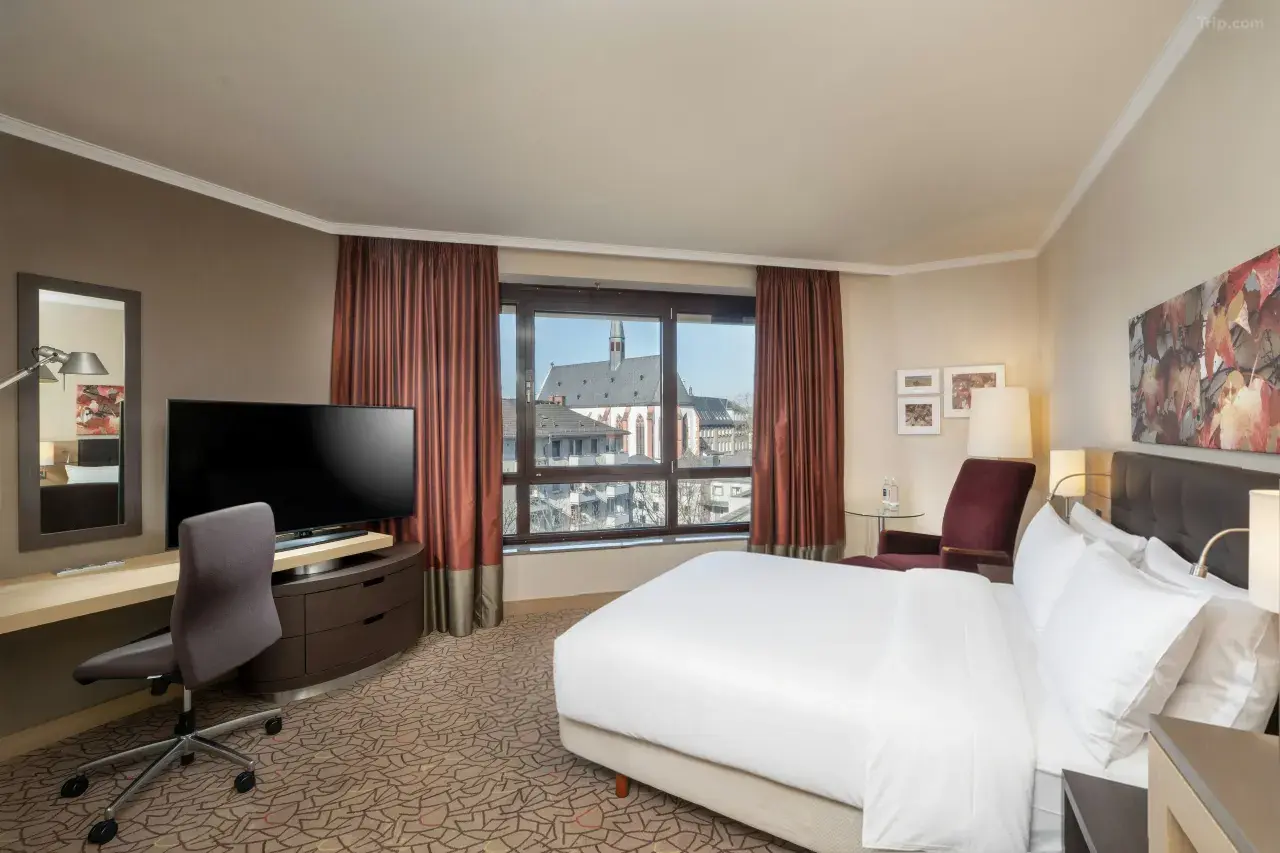

* Contains affiliate links — we may earn a small commission at no extra cost to you.
Best Time to Visit Mainz

Spring felt like a particularly good time to visit Mainz.
The city parks were beginning to bloom, outdoor terraces were filling up and the Rhine promenade had a relaxed energy without feeling overcrowded.
Mainz also becomes especially lively during carnival season and wine events throughout the warmer months. Summer naturally brings busier riverside activity whilst autumn pairs beautifully with nearby Rheingau wine excursions.
Winter likely feels quieter, although the cathedral squares and old town probably take on a cosy atmosphere around Christmas markets.
Our Top Places to Eat in Mainz
Augustinerkeller

Augustinerkeller ended up being one of our favourite meals in Mainz.
The restaurant has a traditional rustic cellar atmosphere serving hearty German dishes alongside Rhine Valley wines and Bavarian beers.
Hristina ordered the venison stew with spätzle and braised red cabbage. The meat was incredibly tender with a rich tomato-based sauce that felt ideal after a long walking day.

I went for the pork knuckle with sauerkraut and baked potatoes – exactly the kind of comforting German dish you hope for in a traditional beer cellar. The crackling remained crisp whilst the meat itself was deeply flavourful and almost falling off the bone.
Paired with a cold lager, it was difficult to fault.
Happy Baker

Although technically part of a chain, we still wanted to mention Happy Baker because it offered something slightly different.
Before boarding our train onwards to Augsburg, we stopped here for pastries to take on the journey. The bakery blends Western-style pastries with Turkish and Balkan influences including simits – circular sesame-covered bread rings popular across Turkey and the Balkans – alongside börek pastries filled with cheese or meat.
We picked up both yellow cheese and white cheese börek alongside a pistachio cream-filled NY Roll.
The pastries themselves were exactly what we hoped for, particularly paired with ayran. The pistachio NY Roll however was absolutely overflowing with cream to the point we genuinely underestimated needing cutlery for the train.
Messy? Yes. Regrettable? Not remotely.
Final Thoughts
What stayed with us most about Mainz wasn’t necessarily one major attraction but rather the overall rhythm of the city.
We remember sitting near the cathedral watching the weather slowly shift from bright spring sunshine into grey Rhine clouds whilst locals continued casually drinking wine beneath outdoor heaters as if nothing had changed. That slower atmosphere seemed to define Mainz more than any single landmark.
For travellers exploring the Rhine Valley by train, Mainz fits particularly well into a wider Germany itinerary alongside places like Koblenz, Cochem or the Rheingau wine region. It may not immediately dominate Germany bucket lists, but we found it one of the easier cities simply to enjoy being in.
And honestly, sometimes those end up becoming the places you remember most.
If you’re ready to start booking, these links cover the essentials — from hotels and tours to insurance and eSIMs.
We send the occasional email with fresh destinations, hotel picks and practical tips we actually use.
- New destination guides and itineraries
- Hotel recommendations (the ones we’d book again)
- Useful travel tools and money-saving tips
- No spam — unsubscribe any time